EN
EN  DE
DE 
During regular product lifecycle analysis, the experienced product manager looks for three warning signs that suggest a product is about to be withdrawn from the market.
The good old days. Our embedded module sold so well. Customers called in droves, wanting to know this and that, wanting it delivered in a specific way. The boss was extremely pleased back then. A constant stream of new orders and positive figures. All gone now. Everything has changed. Nothing is as it once was.
Enough complaining. Clearly, the embedded module has seen better days and should be withdrawn from the market. This final phase in a product's life cycle is called product discontinuation or market exit.
Determining the right moment to announce the discontinuation is a delicate balancing act. Announcing too early diminishes the product's overall performance – the profit phase has not been fully exploited (time tpa1 in the diagram). Announcing too late is equally suboptimal – no CEO is happy when the product has reached the second loss phase (time tpa2).
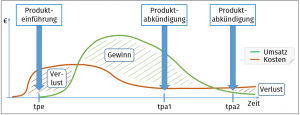
Image: Challenge – Determining the right time to discontinue a product
A skilled and well-trained strategic product manager provides a qualified point for product discontinuation. As part of regular lifecycle analysis, they look for warning signs that suggest a product's market exit:
- Market share falls below a critical threshold due to declining customer demand. Competition is intensifying.
- The ratio of revenue to costs is gradually and steadily approaching parity.
- Technical debt is mounting. The expertise to get the product back on track is lacking.
Once the discontinuation decision is made, the technical product manager is called upon to act. The discontinuation is officially communicated. Marketing and sales of the product are discontinued. Then, all obligations must be resolved – absolutely all of them. Depending on the product, this may require some detective work to uncover all outstanding obligations – usually in the form of warranties and maintenance contracts.
The possible courses of action in real life are endless at this point. Just think of the different obligations of manufacturers of pencils, software, or airplanes.
The best time to discontinue a product is often overlooked, and the effort required for its implementation is just as frequently underestimated.
Further information – continuing education
Requirements engineering and management for embedded systems
MicroConsult Expertise
Modern product management for embedded systems
with further contributions on product lifecycle, customer satisfaction and requirements management