EN
EN  DE
DE Whether a project gets off to a successful start depends on whether the participants see a chance that their needs will be met during the project. Project success is threatened if this hope turns out to be an illusion as the project progresses. It's therefore worth reading on to better understand the role of needs in project success. However, you'll only do so if these opening lines have resonated with a need of yours, such as the need for knowledge.
Whatever we do, we do it because a need drives us. Without needs, no energy is released within us to act. When these needs are threatened, astonishing forces are often mobilized to avert the threat. Without needs, there is no motivation, no joy, no euphoria, and no sense of accomplishment—but also no despair, no fear, no anger, and no hatred.
Needs have the power to awaken the Dr. Jekyll or Mr. Hyde within us. In principle, it's quite simple: as soon as our body or mind detects a deficiency, this manifests as a need. When the body registers a lack of fluids or nutrients, we experience thirst or hunger. These needs alter our perception and behavior.
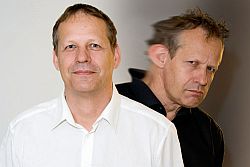
Needs mobilize within us Dr. Jekyll or Mr. Hyde.
(Image: foto art Elisabeth Wiesner)
For example, this increases my interest in beer gardens, butcher shops, bakeries, and other sources of food and drink. If the shortage isn't remedied, I become impatient or, as we say here in the south of Germany, grumpy. When push comes to shove, I fear I forget my good manners, push my way to the front, and greedily shovel in my spoils.
Needs have great power over us once they reach a certain intensity. In extreme cases, a strong need can literally turn us into animals.
Which needs have a particular impact on project work?
I hope you eat (not just junk food) and drink (not just coffee or cola) regularly. So let's turn to the so-called higher needs. These include belonging, security, safety, recognition, knowledge, power, and status. Depending on how people are "wired" and their life circumstances, these needs impact the relationship between the person and the project.
An employee has bought a house and has to make monthly mortgage payments to the bank. For him, the security of his income and the chance for advancement, i.e., a salary increase, may play a decisive role.
This colleague values trusting relationships with people to feel comfortable. She is more committed to her colleagues than to the project itself, as belonging is more important to her. Other team members are driven by their curiosity about new technologies. Safety and social interaction are secondary concerns for them.
You can see that everyone is motivated to engage in a project by their individual needs. The task of skilled leaders is to recognize, make visible, or, if feasible, establish realistic relationships between individual needs and project goals. It helps to be aware that one's own motives are by no means necessarily the same as those of other project participants.
We shouldn't underestimate needs just because we're not (currently) aware of them ourselves. Imagine if everyone strived for power or status. Who would do the work then? Diversity also has its advantages at the level of needs. But where there is light, there is also shadow.
Unfortunately, needs are also the trigger for relationship conflicts when people feel their needs are disregarded or even violated. Relationship conflicts are almost always conflicts of needs. This is also why relationship conflicts are harder to resolve than mere disagreements, because they almost always involve deeply personal matters. Strong emotions then shake the very foundations of our personality. Attacks on our needs throw our psyche into turmoil and can even awaken the animalistic side of us.
Therefore, it is of great importance for the success of the project that we take not only the matter itself, but also our needs and those of the other participants very seriously.
Strong relationships are built on respecting needs. They are the foundation for overcoming crises or, even better, avoiding crises altogether. They are essential for openness, accountability, trust, loyalty, and many other positive qualities that we associate with a strong team spirit.
I felt compelled to write this to you today. I'm now wondering what compelled me to do so: a striving for recognition, a desire for insight through the process of writing, or the wish to maintain my status as a columnist?
Probably a bit of everything. What matters is: I'm fine with it. I don't feel the need to think about it any further. That's good too!
I welcome your comments and suggestions. I'd be happy to send you more background information on the topic of needs and motivation. Please send me an email with the subject line "Motivation" to denkanstoss@microconsult.de.
Training & coaching
MicroConsult Training & Coaching on project management
MicroConsult training and coaching - overview
Food for thought:
Column by Peter Siwon about the human side of project work
Peter Siwon: Systemic project management