EN
EN  DE
DE 
The first part of the article series on choosing the right multicore processor dealt with the... Determining the requirements regarding computing power and their Evaluation for the project. As a second step, we will now consider the Requirements regarding functional safety and data security.
When safety and security requirements come into play in an application, a comprehensive requirements analysis for these aspects is crucial. For example, to achieve ASIL level C, it is required that the results of the main core program be compared with the results of the program processed at a later time in the lockstep/checker core.
This is necessary to detect temporary errors in the Safety Core's result calculation. In response to detected errors, the system must be able to generate appropriate error responses.
In specific cases, an error response without software intervention must be able to bring the system to a safe state. This requires a safety hardware module (Safety Management Unit) that automatically generates a user-selected or predefined error response for each detected error, such as an exception/trap routine, reset, CPU idle state, or an external error signal.
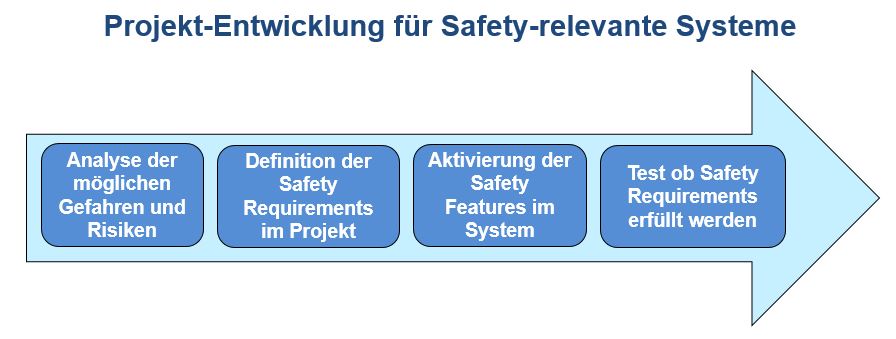
Figure 7: Work steps in project development for safety-relevant systems
To determine the requirements that must be considered in safety-relevant applications, an analysis of the possible hazards and an assessment of the risks must first be carried out.
The required safety level then determines, for example, which safety hardware must be included in a microcontroller so that the system ensures the required level of safety.
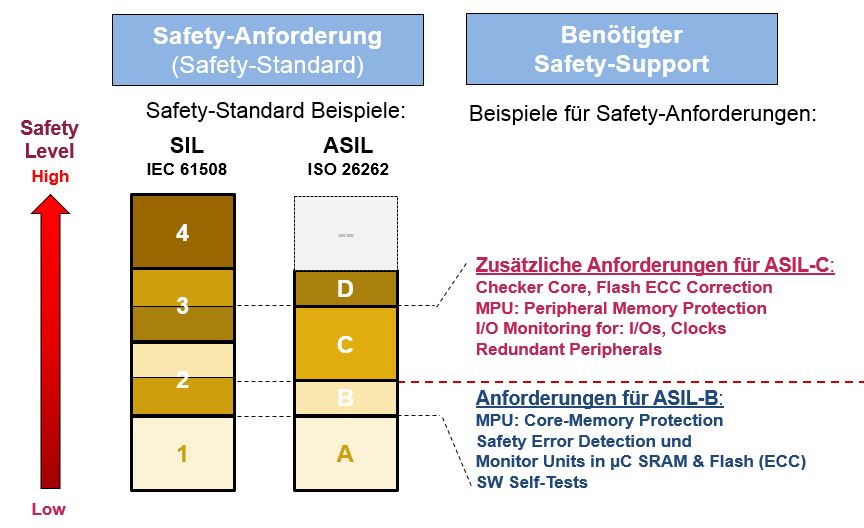
Figure 8: Example of safety requirements for ASIL-B and ASIL-C
A similar approach applies to the security issue:
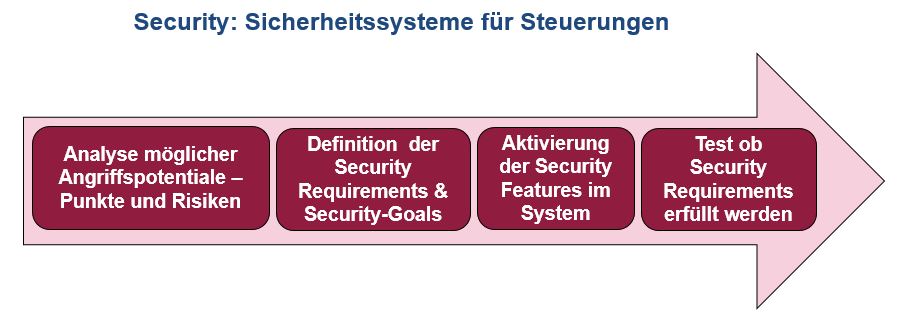
Figure 9: Security – Security systems for controllers
The security goals and attack vectors that could make a system a target must be identified and investigated. Furthermore, it should be assessed whether these potential attacks have an impact on system security and integrity, or whether user privacy needs to be protected by additional measures.
Examples of this include the following aspects:
- Does the system need to include protection mechanisms for the application's software against data and parameter manipulation?
- Is it possible to detect and prevent unauthorized access via external interfaces during the software boot process?
- Is there hardware support for password-protected/encrypted communication and the ability to detect and neutralize viruses in the communication?
The result of this analysis determines what security support is needed in the system. To select the microcontroller responsible for fulfilling the security objectives, it is necessary to examine whether the required hardware prerequisites are met.
- Secure Software Boot and Crypto Bootloader for secure software startup and flash updates
- Flash protection mechanisms
- Access-protected security controller (application-separated (private) flash and SRAM areas)
- Support for password-protected/encrypted communication
Conclusion
Enhanced system safety requirements necessitate specific hardware modules in the microcontrollers.
Go to training schedule
Part 1: How project resources determine the right choice of multicore microcontroller
Part 3: Are the available resources in the periphery sufficient?
Further information
MicroConsult expertise on the topic of multicore & microcontrollers