EN
EN  DE
DE How are you doing right now? This isn't just a casual, polite phrase, like the kind that's increasingly used to start phone calls. It always makes me a little uneasy because I'm never quite sure if the caller is genuinely interested in how I'm feeling. No, I really mean it.
Take a moment to reflect on the following questions: On a scale of 0 to 10 (0 = very low, 10 = very high), where would you place the following feelings that you currently associate most with your work? These feelings are joy, frustration, belonging, isolation, feeling overwhelmed, and a thirst for action. Take a piece of paper, draw a scale from 0 to 10, and mark the points according to your feelings. If you like, you can also scale other feelings that are important to you: curiosity, fear, anger, fun, etc.
Do you have that? Very good!
Next question: How much do you believe these emotional states influence your motivation, your sense of responsibility, or your loyalty? Not at all, slightly, strongly, very strongly?
Do you have that? Great!
Last question – and then you'll find out why I'm keeping you so busy today: How does your mood affect the work situation of your colleagues? Not at all, slightly, strongly, very strongly?
You did it! Thanks for participating!
Perhaps you were already aware that there are connections between the emotional states we associate with our workplace and factors such as performance, sense of responsibility, or loyalty. Likewise, I think most of you would agree that your mood has an effect on the emotional states of your colleagues, especially if you are the boss.
These connections haven't yet sunk in with many companies, otherwise so many researchers wouldn't be going to the trouble of examining the emotional makeup of employees. And eureka, what did they find? The same thing you've probably already discovered, or what your children would have told you: When you're in a bad mood, playing with you isn't as much fun.
Be that as it may, it's not reassuring when common sense, or even a child's, is confirmed in a highly official, representative, and academically rigorous way. I'll briefly summarize the research findings (those who want a more detailed explanation can read the March 2016 issue of Harvard Business Manager magazine):
In addition to cognitive culture, emotional culture plays a significant role in companies. Cognitive culture is expressed, for example, in a company's code of conduct or its mission statement. Emotional culture, on the other hand, is reflected in the attention that is truly paid to human needs such as belonging and recognition. Unlike cognitive culture, it is primarily expressed through body language, facial expressions, and empathy.
I'm not talking about the "Our employees are our most important asset" shows staged once or twice a year, which are used to try and compensate for the deficiencies in interpersonal relationships that have accumulated over the months. I'm talking about the many small, honest, interpersonal gestures that shape our daily interactions. The everyday little joys we associate with our work, the compassion, care, and appreciation we feel from colleagues and superiors, or the trust they place in us, make us more satisfied and strengthen our loyalty. But that's not all: they also have a positive impact on stress resilience and absenteeism, among other things.
How does such a culture of positive feelings come about?
Firstly, it is modeled by management and reinforced among employees; secondly, employees are selected who fit this culture. Furthermore, feelings like good humor and optimism are contagious. Ultimately, people who place less emphasis on the importance of emotional well-being will at least play along if it benefits their professional ambitions. Often, the appetite for it grows with the food, or in this case, with feeling good. As soon as a perceived majority embraces this culture, it increasingly shapes behavior and atmosphere within the company. People who cannot or will not embrace this culture will work there less and less frequently. That concludes my summary.
This doesn't mean we should strive for a "peace, love, and happiness" or purely fun-oriented culture where conflict is taboo. Employees and managers don't need to become mere entertainers or wear their hearts on their sleeves. It simply means giving feelings appropriate space within companies and projects. Forced emotionality is unhelpful when it's exposed as clumsy manipulation driven by selfish motives. Likewise, unrestrained emotional outbursts without considering the consequences for relationships and projects can cause significant damage.
Therefore, the word "culture" is entirely appropriate here: we're talking about cultivated emotionality. A sustainable emotional culture also means being able to withstand, clarify, and resolve conflicts. It is precisely in difficult situations that the true value of this culture becomes apparent. Are we still able to treat each other with respect, compassion, and trust, even when it demands our full commitment? Project work in matrix organizations, which by its very nature repeatedly leads to conflict situations, is a good indicator of where companies stand in terms of their emotional culture. How do people interact with each other in projects when the pressure reaches or exceeds their breaking point?
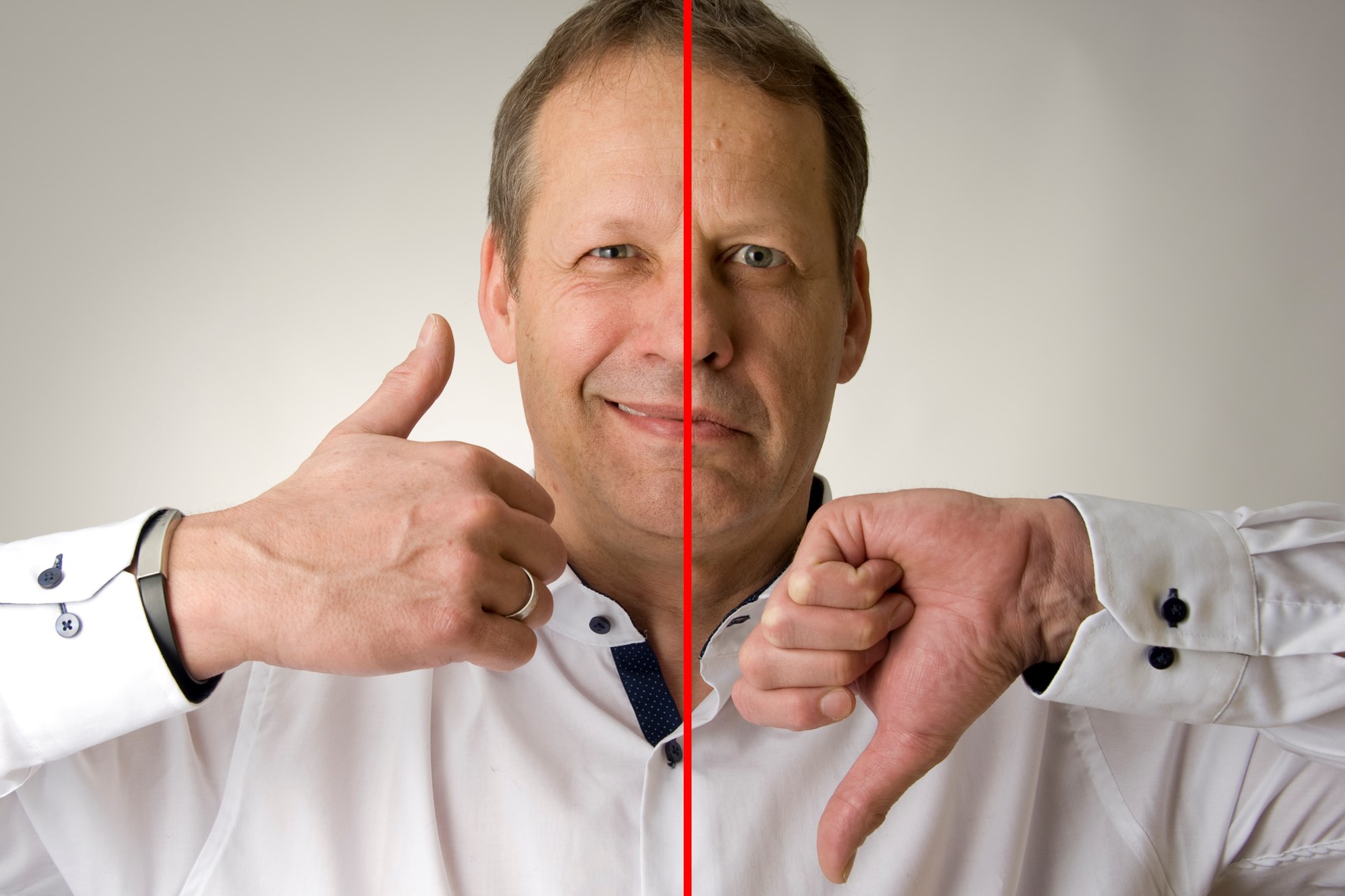
What saddens me somewhat is that there are companies and executives who need studies like these to even begin to examine their emotional culture. What's worse: they need proof of direct business benefit to reflect on the emotional state of their employees and their own thoughts. Anyone who takes a more holistic view beyond the corporate perspective should recognize that people who feel like mere corporate cannon fodder cannot, sooner or later, form the basis of a sustainable economic or social system.
Or am I mistaken? I welcome your comments – preferably by email to denkanstoss@microconsult.de.
Further information
Training & coaching
MicroConsult Training & Coaching on project management
MicroConsult training and coaching - overview
Food for thought:
Column by Peter Siwon about the human side of project work
Peter Siwon: Systemic project management