EN
EN  DE
DE 
FreeRTOS is one of the world’s most widely used real-time operating systems (RTOS) for microcontrollers. But when does it really make sense to use it in an embedded project? This article provides a structured overview of its architecture, concepts, licensing model, extensions, and typical applications to serve as a solid decision-making guide for development projects.
What is FreeRTOS?
FreeRTOS is an open-source real-time operating system developed by Richard Barry in 2003 and maintained by Amazon Web Services since 2017. The kernel is implemented in C and is characterized by a very small footprint. Typically, it requires only 5-10 kB of ROM, depending on the architecture and configuration. This makes FreeRTOS particularly well-suited for resource-constrained microcontroller systems.
Typical applications
FreeRTOS is used wherever deterministic real-time behavior is required, such as
- IoT devices
- Industrial automation
- Automotive electronics
- Medical engineering
- Consumer electronics
- Robotics
Why FreeRTOS?
The key advantages of FreeRTOS include...
- deterministic behavior
- low latency
- high portability
- an active community and extensive documentation
- free commercial use
- small footprint
- a relatively shallow learning curve
A key advantage is its broad architecture support. FreeRTOS runs on over 40 microcontroller architectures, including ARM Cortex-M, Cortex-A, Cortex-R, AVR, RISC-V, PIC, Renesas RX, x86, and many others. For companies, this means a high level of investment security and relatively easy porting within a product family.
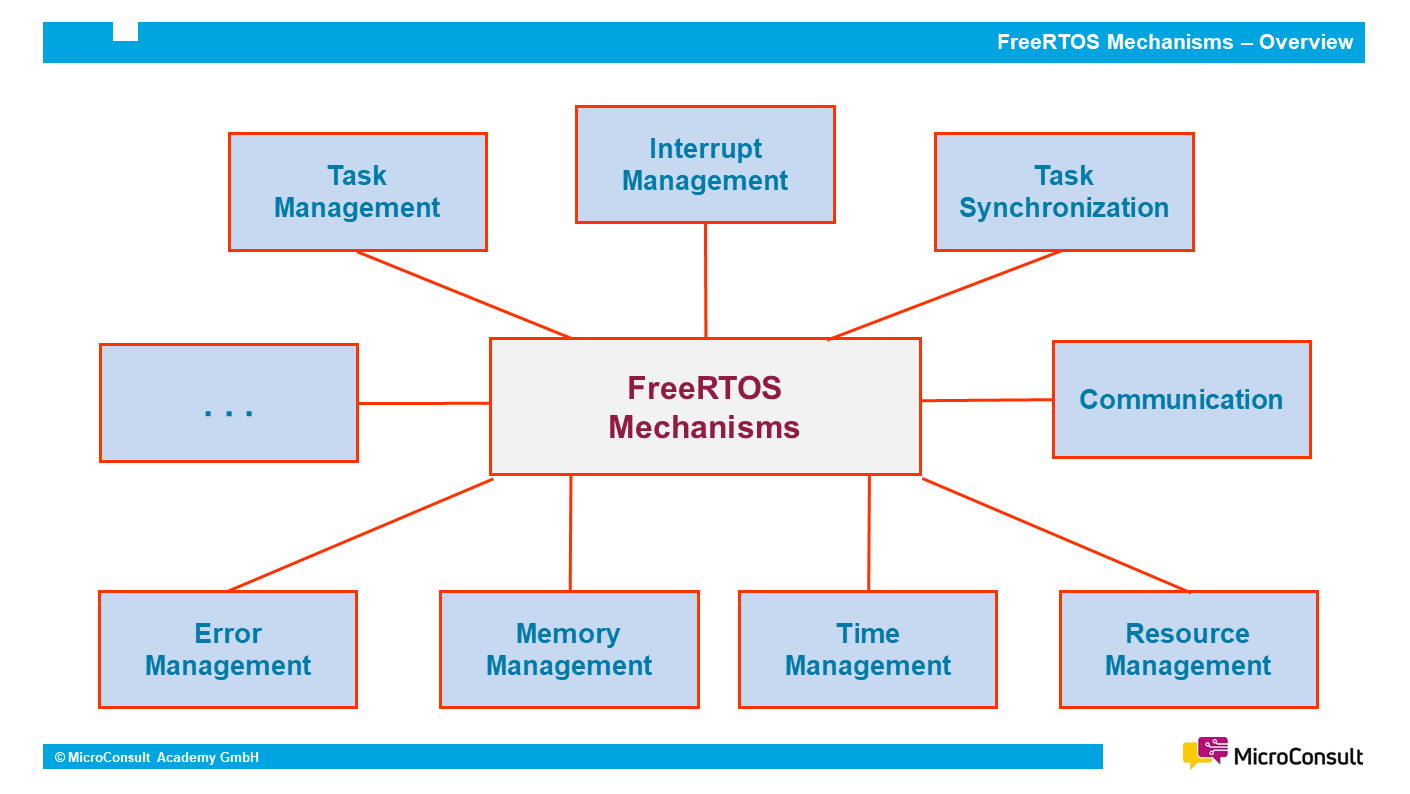
Figure 1: Mechanisms for which FreeRTOS provides development support
Architecture and core concepts
- Task management
FreeRTOS is based on a preemptive, priority-based scheduler. Tasks (threads) are independent execution units with their own priority. The scheduler ensures that the highest-priority ready task is always executed.
Scheduling options:
- preemptive (default)
- cooperative
- time-slicing for tasks of the same priority (tasks of the same priority are executed alternately in millisecond intervals)
Task states:
- RUNNING
- READY
- BLOCKED
- SUSPENDED
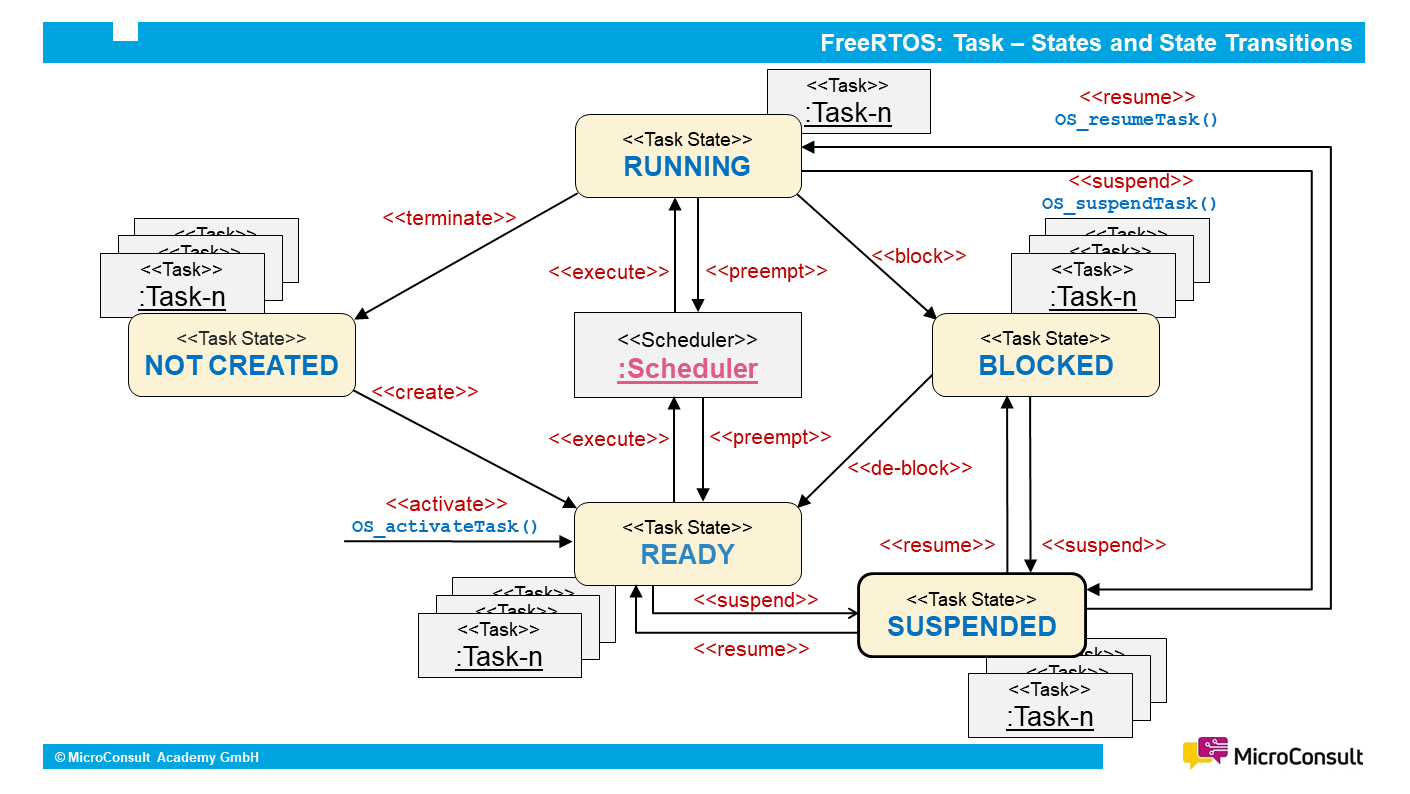
Figure 2: Possible task states in FreeRTOS
- Synchronization, communication, and resource management
FreeRTOS provides numerous mechanisms for inter-task communication:
- Binary semaphores for signaling
- Counting semaphores for resource counting
- Mutexes with priority inheritance to prevent priority inversion
- Event groups
- Task notifications as a particularly lightweight mechanism
- Queues as thread-safe FIFO buffers
- Stream and message buffers
- Memory management
FreeRTOS offers five heap management variants (heap_1 through heap_5) that allow for different trade-offs between simplicity, memory efficiency, and fragmentation behavior - ranging from purely static allocation to more complex dynamic management.
- Software timer
Software timers enable time-controlled or periodic function calls without a dedicated hardware timer. They are managed by a special timer service task.
- Interrupt handling
For interrupt service routines, FreeRTOS provides special API functions with the suffix `FromISR`. Interrupt nesting is supported, as are mechanisms for critical sections.
- Configuration
The entire system configuration is managed via the FreeRTOSConfig.h file. Parameters such as tick rate, maximum priorities, heap size, and enabled features are defined there. This allows the system to be precisely tailored to project requirements.
Extensions and add-on modules
In addition to the kernel, there are supplementary components, such as
- TCP/IP stack
- IoT integration libraries
- File system for SD cards and other storage media
- Command-line interface for debugging and configuration
Debugging and analysis
FreeRTOS offers built-in diagnostic features, such as stack overflow detection, runtime statistics, task lists, and trace hooks. External analysis tools enable detailed runtime analysis and system optimization.
Licensing model - what does this mean for businesses?
FreeRTOS is licensed under the MIT License. This means:
- Free use in commercial products
- No obligation to disclose your own application code
- No copyleft obligations
- Changes to the kernel do not need to be published
The license and copyright notice must be retained. The disclaimer applies; responsibility for testing, safety, and certifications lies with the manufacturer.
Safety-critical applications
For functionally safe applications, SAFERTOS offers a certified version that complies with standards such as IEC 61508, ISO 26262, and EN 62304, among others. A license fee applies for this version.
When is FreeRTOS the right choice?
FreeRTOS is particularly suitable when
- real-time behavior is required
- available memory is limited
- portability between microcontroller architectures is important
- a license-free, established RTOS is required
- scalability within a product family is planned
It is less suitable when a full-fledged embedded Linux system is needed, the focus is on highly complex MMU-based systems, or extensive POSIX compatibility is required.
Conclusion
FreeRTOS is one of the most flexible and cost-effective real-time operating systems for microcontrollers. Its combination of a small footprint, high portability, broad architecture support, and straightforward licensing model makes it the preferred choice for many embedded projects. Its excellent portability also increases long-term flexibility in microcontroller selection and reduces the effort required for product variants or architecture changes.
Would you like to dive deeper?
The RTOS trainings at MicroConsult Academy cover the following topics with a focus on practical application, such as
- Fundamentals of real-time operating systems
- Architecture and configuration of FreeRTOS
- Task design and scheduling strategies
- Synchronization mechanisms
- Debugging and system analysis in real-world project scenarios
This provides development teams with the tools required for the professional and efficient use of FreeRTOS in industrial applications.
Further information
Training: RTOS Application: Development of Runtime Architectures for Embedded and Real-Time Systems
MicroConsult Training & Coaching: Embedded and real-time programming
MicroConsult Training & Coaching: Embedded and real-time operating systems
MicroConsult Expertise: Embedded and real-time software engineering